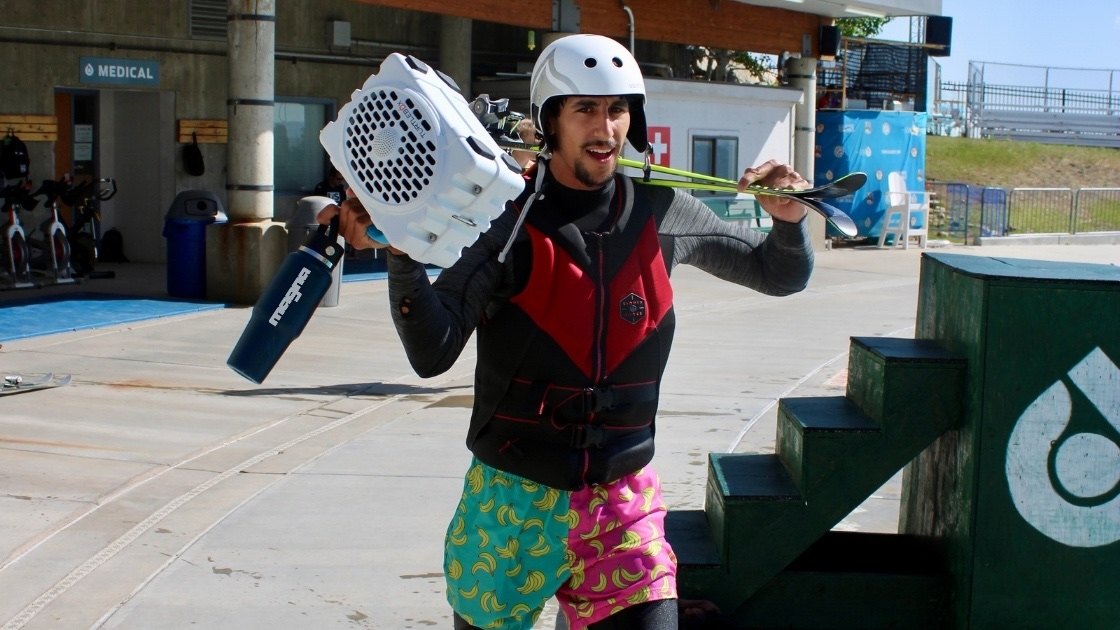

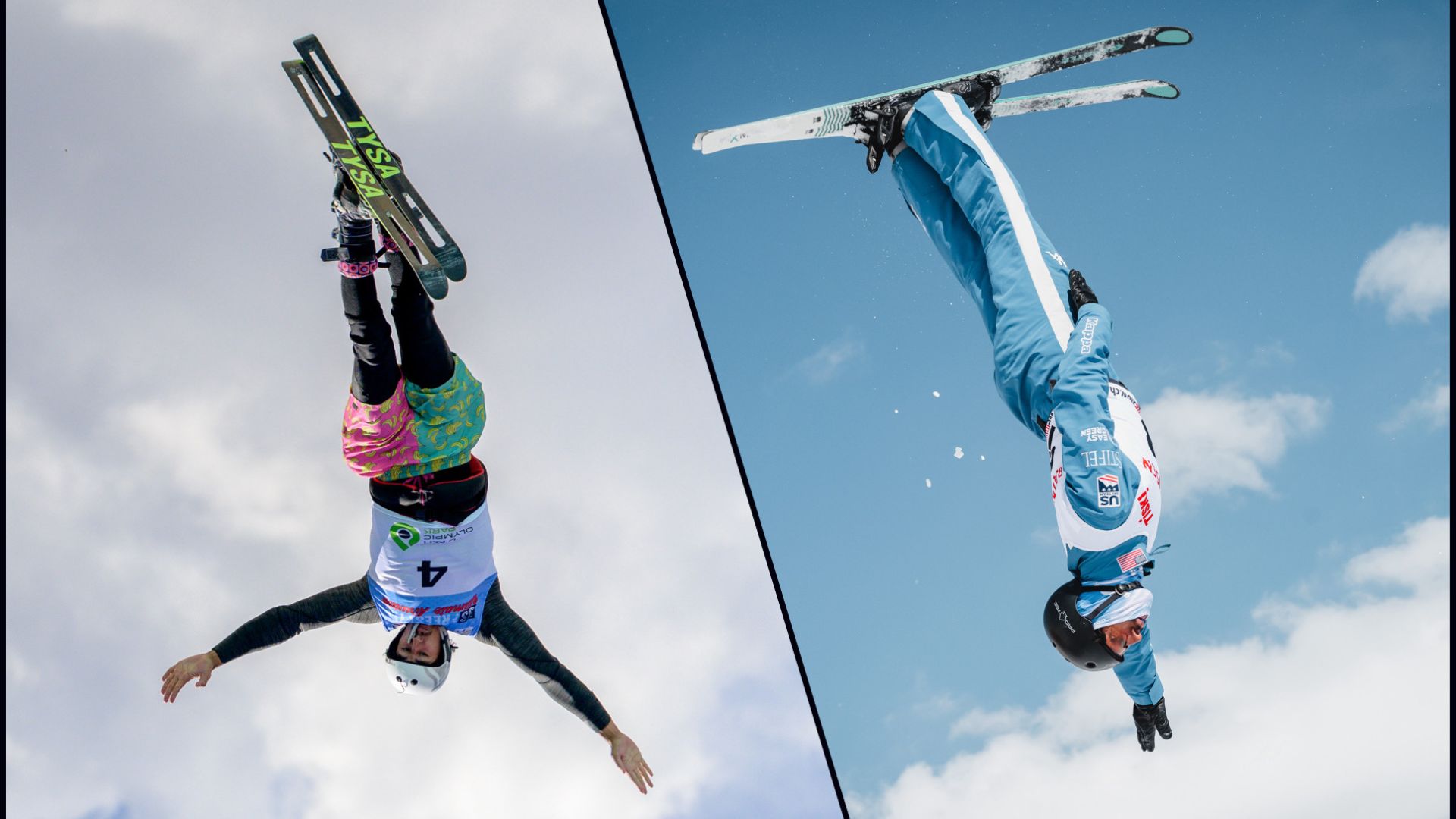
So here’s what freestyle aerials really is — coming from someone who lives it, trains for it year-round, and competes on the World Cup stage.
Inside the Sport
Most people see freestyle aerials for the first time and think the same thing: That looked cool… but what actually just happened?
I get it. From the outside, aerials is over in seconds. One jump. One landing. A quick score on the screen. But what you don’t see is the years of preparation, the strategy behind each decision, and how thin the margin is between flying and failing.
"A freestyle aerial jump lasts seconds - but it’s built on years of preparation and one chance to get it right."
The Basics of Freestyle Aerial Skiing
At its core, freestyle aerials involves skiing off a steep ramp, performing flips and twists in the air, and landing cleanly on a sharply angled hill — at speed, often between 28–41 mph. If you want the official overview, U.S. Ski & Snowboard also has a solid Aerial Skiing 101 explainer.
Every jump has four critical phases. Miss one piece, and the entire jump unravels:
- Approach: Speed, alignment, and composure
- Takeoff: Timing and accuracy decide everything
- Air: Flips, twists, and body control
- Landing: Absorbing force and skiing away clean
How Freestyle Aerials is Judged
A jump can look impressive and still score poorly if one element above breaks down, which is why execution is just as important as difficulty. Each jump is scored using the three components below.
- Air: Judges evaluate height and distance. Enough air is required to complete the jump safely and cleanly.
- Form: This is about control — tight body position, symmetry, and precision through every flip and twist.
- Landing: Landings matter. A strong landing absorbs impact smoothly, stays centered, and skis away with confidence.
Each jump also carries a degree of difficulty, which reflects the number of flips and twists being attempted. That difficulty value multiplies the execution score, meaning harder jumps have more scoring potential — but only if they’re performed cleanly.
"Bigger flips don’t always mean higher scores. Clean execution often beats raw difficulty.”
Difficulty v. Strategy in Aerials
Not every competition calls for the hardest jump an athlete can do. Freestyle aerials is a sport of strategic decision-making. Athletes choose jumps based on:
- Weather and wind conditions
- Qualification vs. finals rounds
- Consistency and confidence
- What score is actually needed to advance
Sometimes the smartest move is a slightly easier jump executed perfectly. Knowing when to push — and when not to — is part of competing at the elite level.
"The hardest jump isn’t always the right jump. Strategy matters just as much as difficulty."
How Freestyle Aerial Athletes Train
Much of aerials training happens off snow, where athletes build the strength, timing, and air awareness required to perform safely and consistently. Athletes train year-round using the following:
- Water ramps during the summer months to safely practice full jump mechanics
- Trampolines for air awareness and timing
- Strength training to handle repeated impact
- Mental repetition and visualization
- On-snow training to transfer skills into real competition conditions
When winter arrives, those skills have to transfer from water to snow. Athletes refine timing, takeoff patterns, landing control, and confidence so the work built all year can hold up in competition. There’s no hesitation once you leave the ramp.
The Reality of Competing in Aerials
Freestyle aerials is physically demanding and mentally intense, pushing athletes to manage pressure, precision, and risk on every jump. Athletes face:
- High-impact landings
- Long travel schedules
- Constant weather changes
- One-jump outcomes where mistakes are costly
"There’s a moment in the air where everything goes quiet. That’s when preparation takes over."
How to Watch the Sport
Once you understand aerials, the sport looks different. You notice approach speed. You recognize smart strategic choices. You feel the weight of every landing. Freestyle aerials isn’t just spectacular — it’s deliberate, calculated, and unforgiving. That’s what makes it special.
This guide is just the beginning. Follow along as I share the training, competition, and decisions that shape my life on the World Cup circuit.
.jpg)