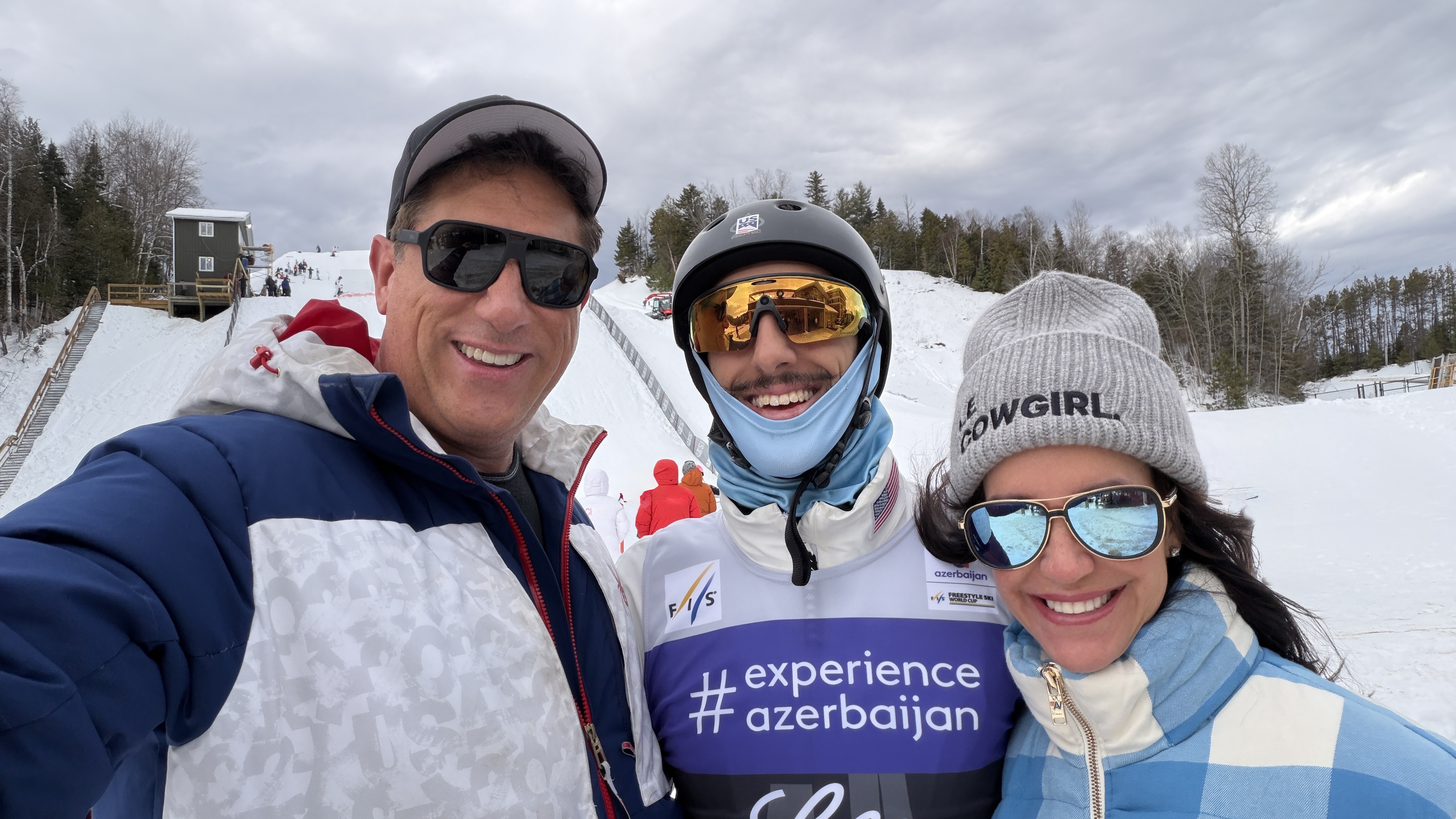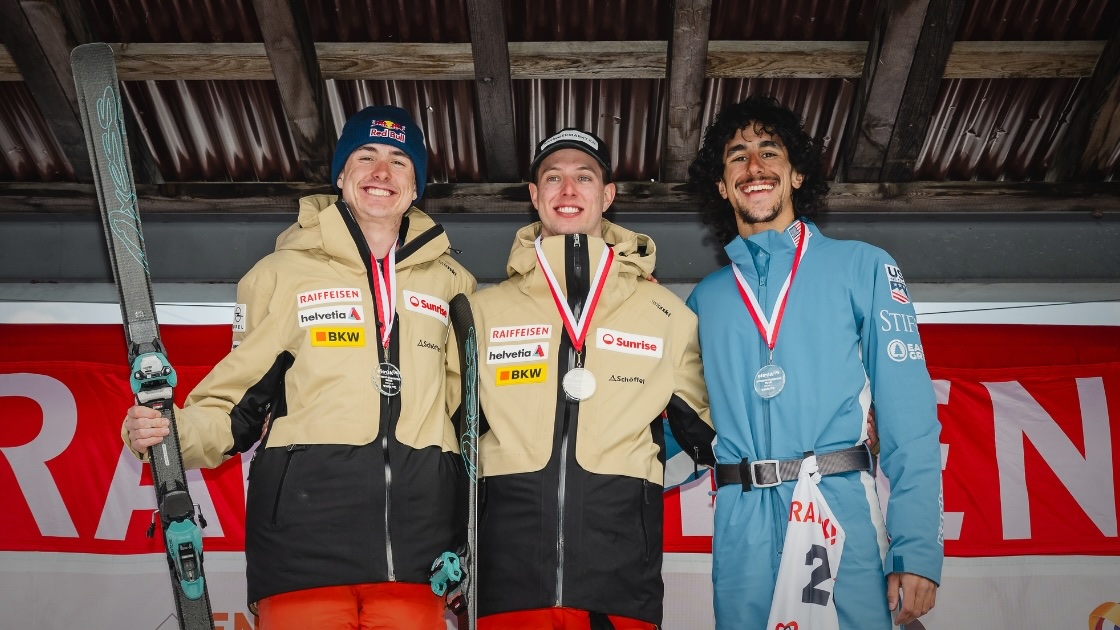

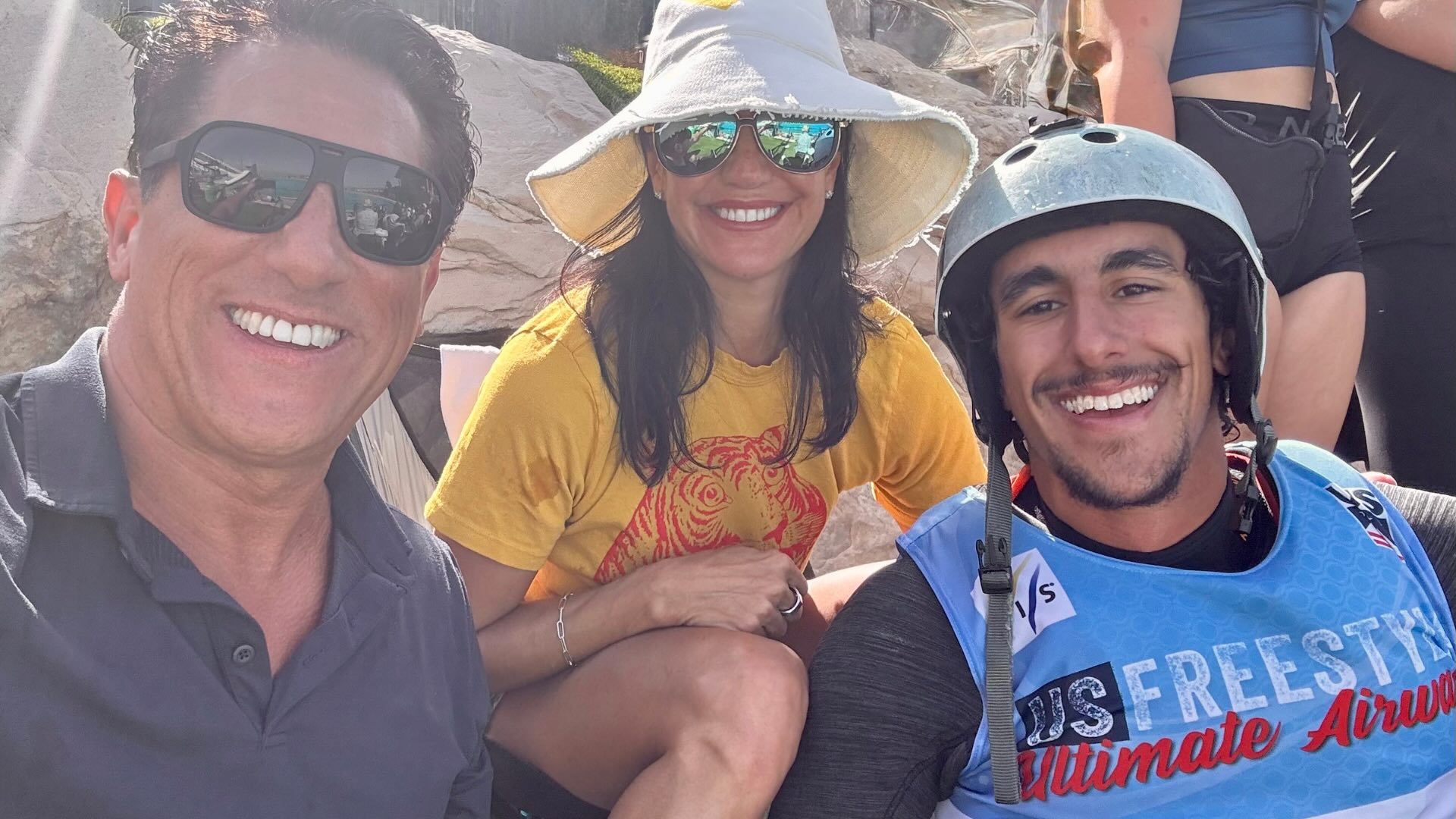
[The Path Beneath Him] A reflection on the unseen structure behind Ashton Salwan’s freestyle aerials journey — and what Team Salwan carried to keep the path alive.
The Part No One Sees
For most people, freestyle aerials is over in seconds.
A skier accelerates down the in-run, leaves the jump, rotates high above the snow, and lands — cleanly or not — before the eye has fully caught up. The score arrives moments later. The result is recorded. The day moves on.
That is the public version of the sport. The private version takes years.
For Team Salwan, Ashton’s path was never built only in takeoffs, landings, and results. It was built in trust, repetition, setbacks absorbed and answered, and decisions made long before there was any guarantee they would be rewarded.
That is the part of the story a scoreboard cannot hold.
Built Under Pressure
What began as an outdoorsy activity became a serious pursuit, then an elite one. As Ashton advanced, the demands of the sport grew sharper — and so did the resistance around him.
There were times he was overlooked when he should have been seen. Times when the opportunity did not come when it should have. Times when the answer was “not yet,” “not now,” or simply “not him.” The hits kept coming.
Each setback demanded a decision: pull back or push forward. Accept the narrower vision or keep building the larger one.
Team Salwan kept choosing Ashton.
And in that repeated choice, the family changed. What began as support became something stronger — more deliberate, more resilient, more unified, more forceful in the work.
The Bottom of the Outrun
For Ashton’s parents, Ashton’s love for this path has meant learning a discipline few people are ever asked to develop. It has meant holding two realities at once: profound belief in what Ashton is capable of, and full awareness of what the sport can demand in return.
Support in this sport is not the absence of fear; it is the choice to keep standing at the bottom of the outrun anyway.
There is no perfect way to watch a son launch into a quad-twisting triple jump 60 feet high into the air. No parent trains for that. There is only the slow education of experience: learning the rhythm of a competition day, recognizing the silence before a start, and remaining steady enough that Ashton can do the same.
“Most people only see the jump and the result.
My family knows everything underneath it —
the work, the setbacks, the travel, the repetition, the politics, all of it.”
— Ashton Salwan
The public sees the performance.
Team Salwan has lived the cost. And still, they stayed in it.
What Was Forged
What Ashton’s results have never fully shown is not only what his path required, but what that path forged.
It forged a family that learned how to keep moving under pressure. A support system that did not depend on easy validation or smooth passage through the established route.
Not just hope. Not just love. Not just applause.
Structure. Discipline. Conviction.
That is part of what makes Team Salwan more than a phrase. It is the unit that kept growing stronger each time the path demanded more.
For Ashton, that consistency has mattered as much as anything. The support around Ashton mattered because he kept meeting it with effort, discipline, and belief of his own.
“Support in this sport isn’t just being there when things go well.
It’s staying steady when progress isn’t obvious yet.
That’s probably what means the most.”
— Ashton Salwan
The family kept choosing Ashton. Ashton kept choosing the work. And together, that became something difficult to break.
What Endures
And when Ashton returns to earth — when skis reconnect with snow and the run is complete — the release is immediate, but never casual. When the jump is landed, relief comes and pride follows close behind. When it is not, the feeling shifts just as quickly: concern first, then the quiet process of absorbing what comes next.
In those moments, the score is secondary.
Because beyond rankings, beyond starts, beyond nominations, and beyond the brief visibility of competition day, there remains a simpler truth: Ashton has never carried this path alone.
That is what isn’t scored.
Not what was sacrificed. Not what was financed. Not what was carried quietly. Not what grew stronger because it had to.
Long before the takeoff. Long after the landing. And often far from public view.
That is where this family was tested. That is where Team Salwan became what it is.
And every time the hits kept coming, they got back up and fought again.