

[Within Reach] The aftermath of missing the 2026 Winter Olympics — the isolation, the replay loop, and the quiet courage it takes to keep training.
Close Enough to Touch
Some losses don’t look like losses from the outside. For Ashton Salwan, there wasn’t a single crash or defining injury during the 2026 Olympic qualifying season that explained everything. There was only the quiet reality of being close enough to feel the Olympic dream within reach — and then learning it wouldn’t happen.
It felt like a long voyage cut abruptly short — two years of deliberate focus inside the 2026 Olympic qualifying window, suddenly over. Missing by a mile would have been an easier pill to swallow.
When you’re that close to the line, the mind doesn’t close the chapter cleanly. It replays. It rewinds. It searches for the one moment that could have shifted the outcome — and it does it in the quietest places: the drive home, the empty morning, the next time you pack your bag and realize the destination changed.
The Mental Whiplash
Ashton was getting his Olympic jumpsuits fitted, planning travel logistics, believing he was inside the circle. Then everything changed two days later.
The swing was brutal. Not only emotionally — physically. His system had been running on focus, adrenaline, and control. Days had been engineered around purpose: eat, train, recover, repeat. Everything had been built toward one outcome.
And when that outcome disappeared, the body didn’t know how to downshift. The nervous system stayed on high alert, even when the calendar didn’t.
“I gave everything — everything — I had, in the pursuit of this dream.
Dreaming big dreams, going all in and having repeatable results shouldn’t make you feel like a failure.”
— Ashton Salwan
That line mattered because being that close can trick anyone into believing the effort was wasted. It wasn’t. The work was real. The commitment was real. The dream was real. Still, it wasn’t enough.
Sorrow and Solitude
What made the aftermath different wasn’t only the disappointment — it was the speed of the shift. Life moved on. And Ashton carried the weight of “almost” in the quiet. The grief didn’t spike and pass — it settled in.
“In the days following the news that I wouldn’t be going to Italy, I was filled with sadness and tears.
But more than anything else, I felt utterly lost and adrift.”
— Ashton Salwan
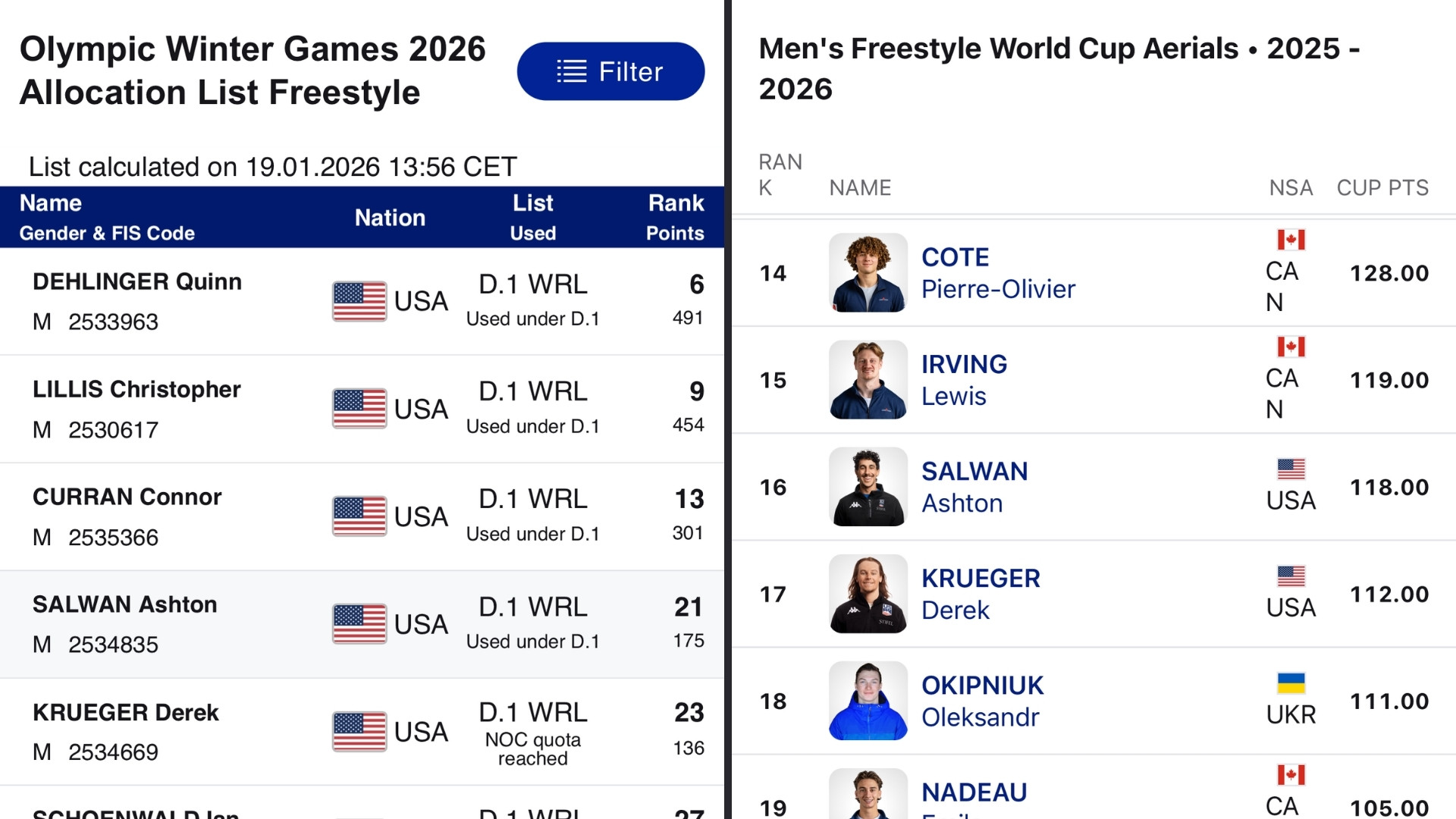
He pursued the formal review avenues available to him, hoping the outcome could change — but it didn’t. The decision held. The written procedures prioritized specific World Cup results, and Ashton’s broader body of work did not change the Olympic outcome.
The training reality changed, too. After a break in access, Ashton returned on a different practice setup rather than the triple kicker he’d worked on all season. The competition plan shifted to the FIS NorAm Cup — a meaningful competition pathway, but not the Olympic stage he had spent two years preparing to reach.
The loss didn’t stay theoretical — it hit in the mundane: an Olympic calendar erased, a competition plan rewritten overnight, the quiet scroll of watching others live the experience he’d been close enough to touch. He simply wanted the chance to keep doing the work he had spent the season building.
Later, a U.S. aerials athlete did not compete at the Games. Ashton was not added as an alternate, leaving his 2026 Olympic opportunity unequivocally over.
People talk and write about how hard it can be for Olympians to return home — for those who don’t medal, even for those who don’t make finals. But not being chosen for the Games carries a unique loneliness, because you don’t get to step onto that stage at all. And the next chance isn’t next season — it’s another four years away.
What to Choose Next
Ashton found gratitude without using it to erase disappointment. Gratitude for the people who stayed close. Gratitude for the coaches who kept teaching. Gratitude for the chance to keep doing something rare: to fly, to risk, to learn, to grow.
The 2026 Winter Olympics had been the dream — a powerful one. But he didn’t disappear when that dream didn’t land on schedule. If anything, this was where his foundation strengthened. This was where belief became real.
And even with the loneliness — even with the replay — the work still remained. And so did he.