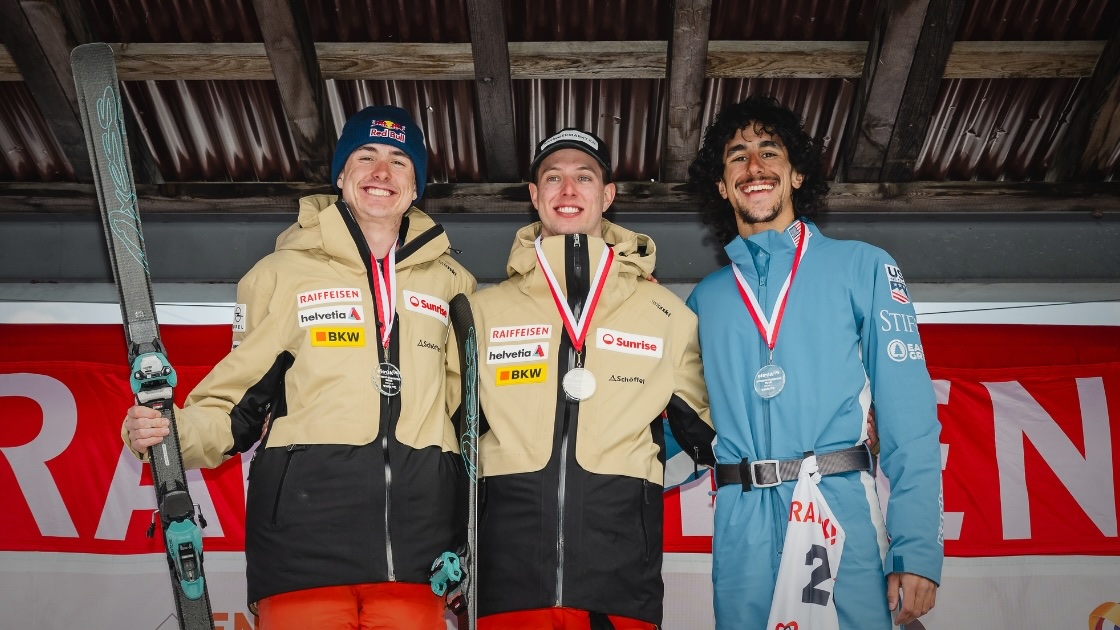

[Early Architect of Flight] Kelly Hacker shaped Ashton Salwan’s young foundation and returned years later with quiet strength, helping steady one of the most difficult chapters of his season.
An Influence That Endured
Some coaches arrive in the bright center of a season.
Others are revealed more clearly when the season has gone quiet.
Kelly Hilliman Hacker’s place in Ashton Salwan’s journey belongs to both kinds of time.
She was there in the early years, when the work was still young and the future existed more as instinct than definition. And she was there again much later, when a season that had been built toward one stage was forced to continue on another. Between those two chapters lies something larger than timing alone. It is the kind of continuity that gives a sport its deeper shape: the coaches who help form the beginning, and who later reappear when steadiness matters most.
“Kelly and Corey were part of my early years in the sport, and having Kelly there again later in the season meant more than I can put into words. She brought steadiness, clarity, and a kind of trust that stays with an athlete.”
— Ashton Salwan
That is part of what makes Kelly’s presence in Ashton’s 2025/26 season so meaningful.
Where the Foundation Was First Laid
Long before FIS start lists, selection debates, and the emotional weight of a season redirected, Kelly and her late husband, Corey, were part of Ashton’s early development in freestyle aerials.
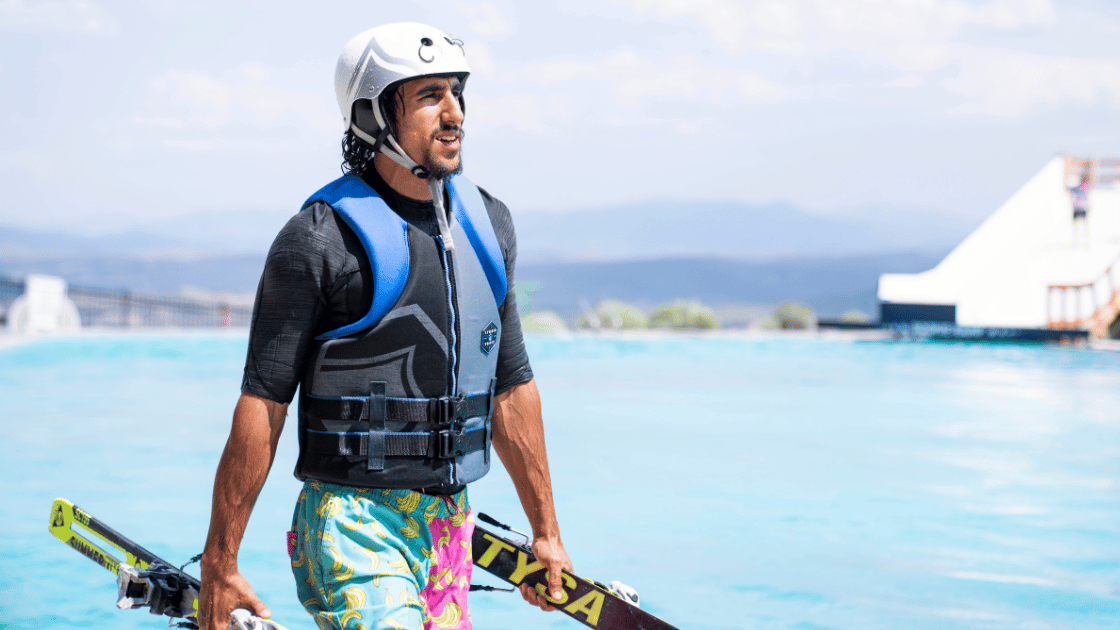
During summer water ramp camps in 2017, 2018, and 2019, when Ashton was just 12 to 14 years old, they were among the coaches helping shape the technical and personal base beneath the athlete he would become. Those years were formative in all the ways that matter most. They were years of repetition and correction, of learning air awareness, of building trust in the process, and of returning to the jump again and again until confidence began to live beneath the surface.
In a sport like aerials, foundations are rarely dramatic while they are being built. They are quiet. They are exacting. They are made in small refinements that accumulate over time. Athletes may one day be seen in the air, but before that they are shaped on the ramp — through patience, guidance, consistency, and the careful standards of coaches who understand what early work can become.
Kelly and Corey were part of that early architecture.
Their contribution belongs not only to memory, but to structure: to the unseen beginnings that made later progress possible.
When the Season Changed Shape
Years later, Kelly re-entered Ashton’s story in a very different chapter.
The 2025/26 season had carried the pressure and possibility of Olympic pursuit. When that path closed, the loss did not remain confined to one decision or one moment. It followed in subtler ways — in the recalibration that came after, in the interruption of rhythm, and in the emotional and practical work of continuing forward when the season no longer resembled the one he had spent months building toward.
Instead of the Olympic stage, Ashton’s path turned toward the FIS NorAm Cup tour.
That reroute changed more than a schedule. It changed the atmosphere around the work. The spotlight had shifted elsewhere, but the demands of the sport had not. Training still had to continue. Standards still had to hold. Ashton still had to find a way to compete with discipline while carrying the disappointment of a different outcome.
This was no longer a chapter of anticipation.
It was a chapter of response.
The Value of a Steady Hand
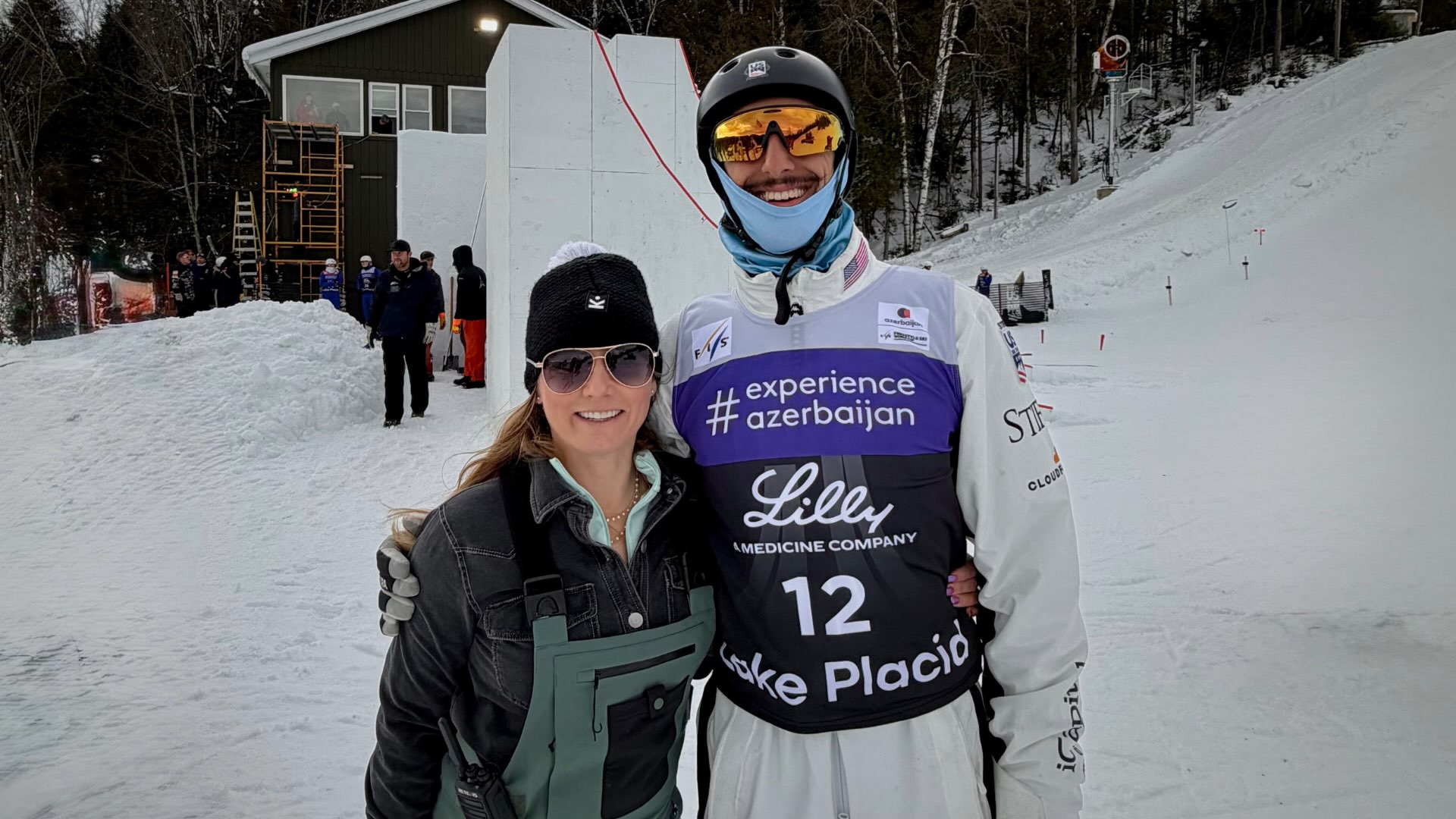
Working with Ashton during the 2026 NorAm segment, including stops in Lake Placid (USA) and Lac-Beauport (CAN), Kelly brought something that season required in full: calm, clarity, and structure.
Her advice did not rely on spectacle. It did not add noise to an already difficult moment. Instead, it offered something more enduring — composed technical guidance, measured feedback, and a stabilizing presence around an athlete being asked to continue through a part of the season that carried more weight than most people would ever see.
“She didn’t try to make the moment smaller than it was.
She just helped me stay in the work.”
— Ashton Salwan
That kind of direction is easy to overlook from the outside. It is not always visible in a result line or captured in a headline. But inside the life of an athlete, it matters profoundly.
Because some of the most important mentoring in elite sport happens after the visible dream has been interrupted. It happens when disappointment is still close, when motivation has to be rebuilt rather than assumed, and when the athlete must remain faithful to the work without the emotional momentum that once framed it. In those moments, insights becomes more than instruction. It becomes stewardship.
Kelly coached that way.
Although Ashton remained a U.S. Ski Team athlete, her guidance, steadiness, and technical support were invaluable during that phase of the season. She helped preserve order inside uncertainty. She helped reinforce standards without hardness and provide support without lowering expectation. She helped make continued development possible in a chapter that could easily have drifted.
The Long Arc of Development
What made Kelly’s role during that period especially resonant was not simply that she was present. It was that her presence carried history.
She was not a coach appearing at random in the wake of a setback. She was someone linked to Ashton’s foundation — someone who had helped shape the early layers of his development and who later returned to help steady him through one of the more difficult stretches of his competitive life.
That continuity carries its own kind of meaning.
Aerials is a sport of visible flight built on invisible accumulation. The public sees the jump, the twist, the landing, the score. But the life of the athlete is built elsewhere — across seasons of refinement, seasons of doubt, seasons of progress that do not always announce themselves. Coaches who understand that long arc see more than a moment. They understand the athlete as a living body of work.
Kelly understands that.
And in honoring Kelly, it is impossible not to also honor Corey, whose place in those early years remains part of the same foundation. The work they helped shape did not vanish with time. It remained — in Ashton’s technique, in his trust in process, and in the habits of repetition and correction that elite sport continues to ask of him years later.
Some coaches help launch a season.
Others help anchor a career more quietly, from underneath.
Kelly and Corey belong to that second kind of influence: foundational, enduring, and woven into the athlete long after the individual session, camp, or year has passed.
What Stays the Course
In a season marked in part by what did not happen, Kelly Hacker helped ensure that something essential still did.
Progress continued.
Not in the loudest way. Not in the most celebrated way. But in the way that matters most over time — through steadiness, trust, technical care, and the refusal to let a difficult chapter become a final one.
That is part of excellence.
Not only helping build the ascent, but helping hold the line when the season turns, the stage changes, and the athlete must find his footing again.
Kelly was there in the early years, alongside Corey, helping shape the base.
And years later, when the season demanded composure more than celebration, she was there again.
That is more than a return.
That is part of the foundation.