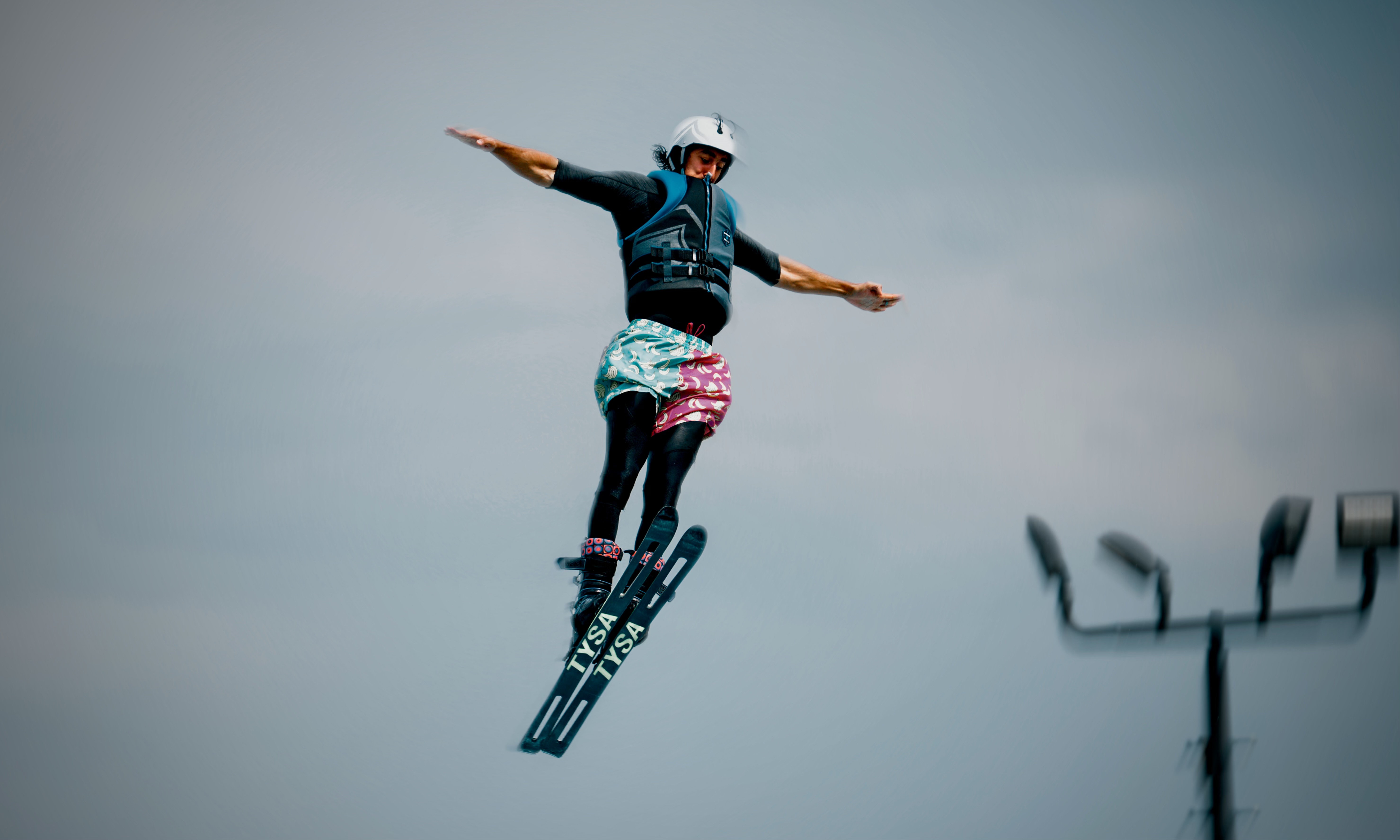

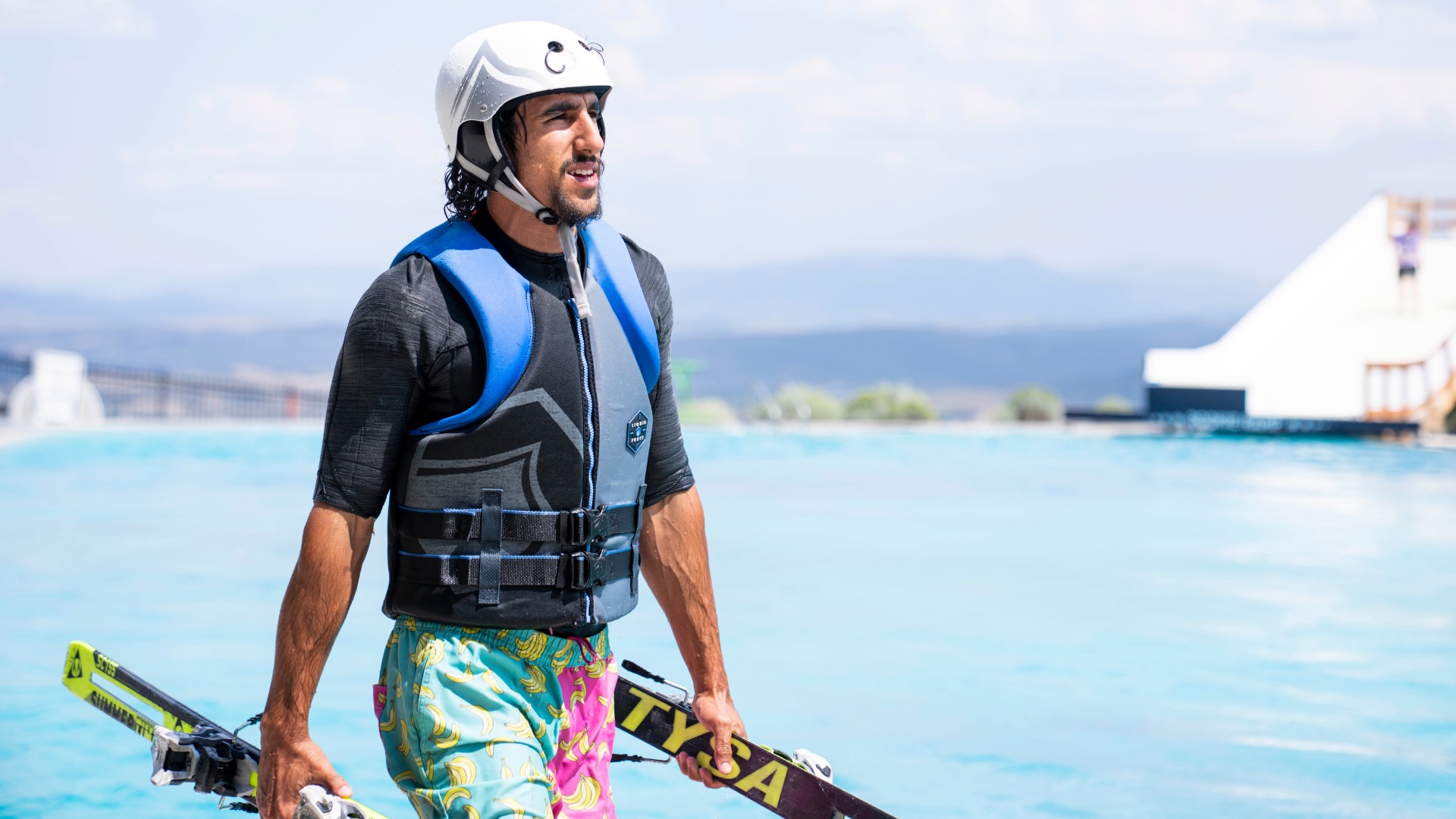
[Restraint Before Progression] Ashton Salwan entered the water-ramp season ready to build — only to have a series of foot setbacks reshape the Utah block. What followed at Utah Olympic Park was not a rush back to difficulty, but a measured return to rhythm before the preseason shifted overseas.
Preseason Training: Utah 2026
Ashton Salwan entered the summer of 2026 with momentum. After earning a second nomination to the U.S. Ski Team, the next phase was clear: sharpen execution, build consistency, and begin laying the foundation for the season ahead.
Then life asked something different of him.
A high-ankle sprain in May kept Ashton off the water ramps. A second foot injury in July forced another pause. What was supposed to be a clean summer progression became something harder — a test of patience, discipline, and trust in the process.
For an aerialist, time away from the water ramps is never neutral. The sport is built through development, repetition, and refinement: feel, timing, takeoff pressure, air awareness, landing control. Miss enough days, and the body does not simply pick up where it left off.
The Waiting Game
The hardest part of the block was not always the pain. It was the waiting.
While the summer moved forward around him, Ashton had to sit with missed jumps, lost volume, and the frustration of a training plan that kept asking for restraint. The setback was real, but it was not the bottom. After the year he had just lived through — the thin margins, the Olympic miss, the emotional weight of being one spot away — Ashton understood that frustration did not have to become panic.
The work was to adjust to adversity without letting it define his summer.
“The training interruptions this summer were frustrating, but they weren’t the bottom.
I’m learning that you can respect a hard stretch without letting it take over.
You manage the day in front of you, stay grateful for the good days, and keep building.”
— Ashton Salwan
That became the tension of the Utah training block: urgency without rushing. The goal was not to force the season back onto schedule, but to keep the larger build alive.
The Return to Rhythm
Ashton’s summer on the water ramps began on July 21 — more than six weeks behind the original training plan.
The first phase back was measured by design. The work began with rhythm, confidence, and repetition quality before anything more aggressive could be layered in. The return was not about proving toughness. It was about rebuilding readiness — and before difficulty could matter again, the foundation had to hold.
That is the quiet truth of aerials: the biggest jumps depend on the smallest details. A rushed takeoff shows up in the air. A loose body line changes the landing. Confidence is not manufactured at the top of the ramp; it is built through the repetitions that came before it.
The work was simple only from the outside. Inside the block, it was exacting.
A Familiar Voice in a New Chapter
The Utah training block also brought Ashton back into a familiar coach-athlete rhythm with Matt “Saundo” Saunders. Their work together had already shaped a defining chapter in Ashton’s rise, but 2026 was different.
Ashton was no longer entering the summer as an independent athlete trying to prove he belonged. He was coming off a rookie World Cup season, now part of a broader U.S. Team training environment, with a clearer understanding of what elite consistency demands.
This was not a return to the past. It was continuity inside a more complex chapter — a trusted technical voice at a moment when the work required patience, precision, and restraint.
The Closing Window
With the Spence Eccles Olympic Freestyle Pool and water ramps set to close after the August training period for construction and renovation, every remaining session mattered. Utah would not complete the 2026/27 build, but it would set the standard Ashton needed to carry forward.
The block reached its checkpoint on August 23 with the Utah Olympic Park water-ramp competition. The event did not carry Grand Prix status or offer FIS credit, yet it still mattered.
But another complication unfolded: a third foot setback limited Ashton’s competition preparation. After taking a single training jump, Ashton made the decision not to compete, choosing to protect the larger preseason build rather than force a contest start at the end of an already fragmented block.
The Standard Re-Established
After a summer that demanded patience before progression, the water ramps at Utah Olympic Park became the place where the standard was re-established: restore readiness, return to the work, rebuild rhythm, and keep the larger 2026/27 build alive. From here, Ashton's training moved overseas — first to Brisbane, then into the next phases of the preseason.
The plan shifted. The purpose did not.
SEE IT IN MOTION: Watch the companion film HERE