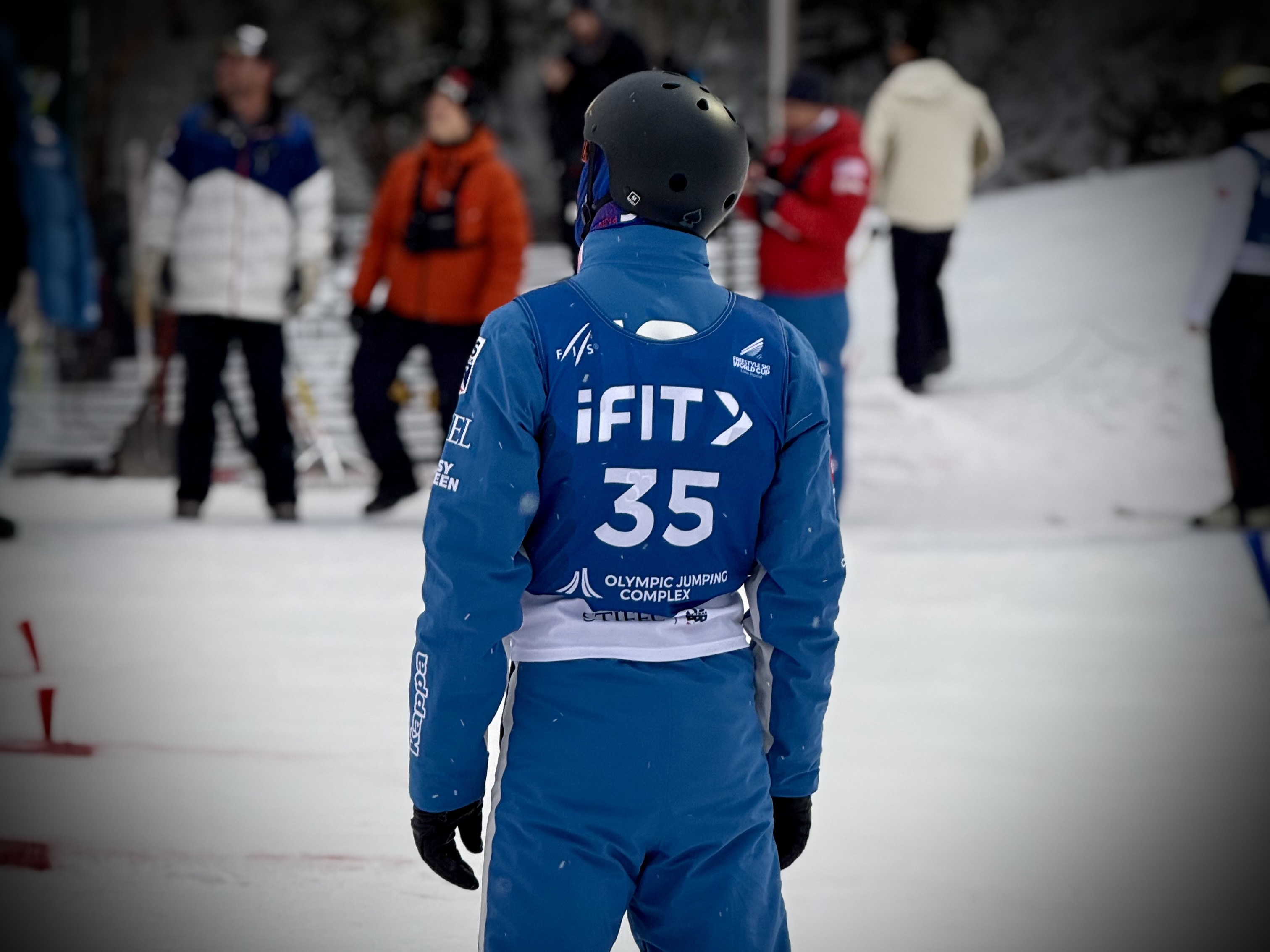

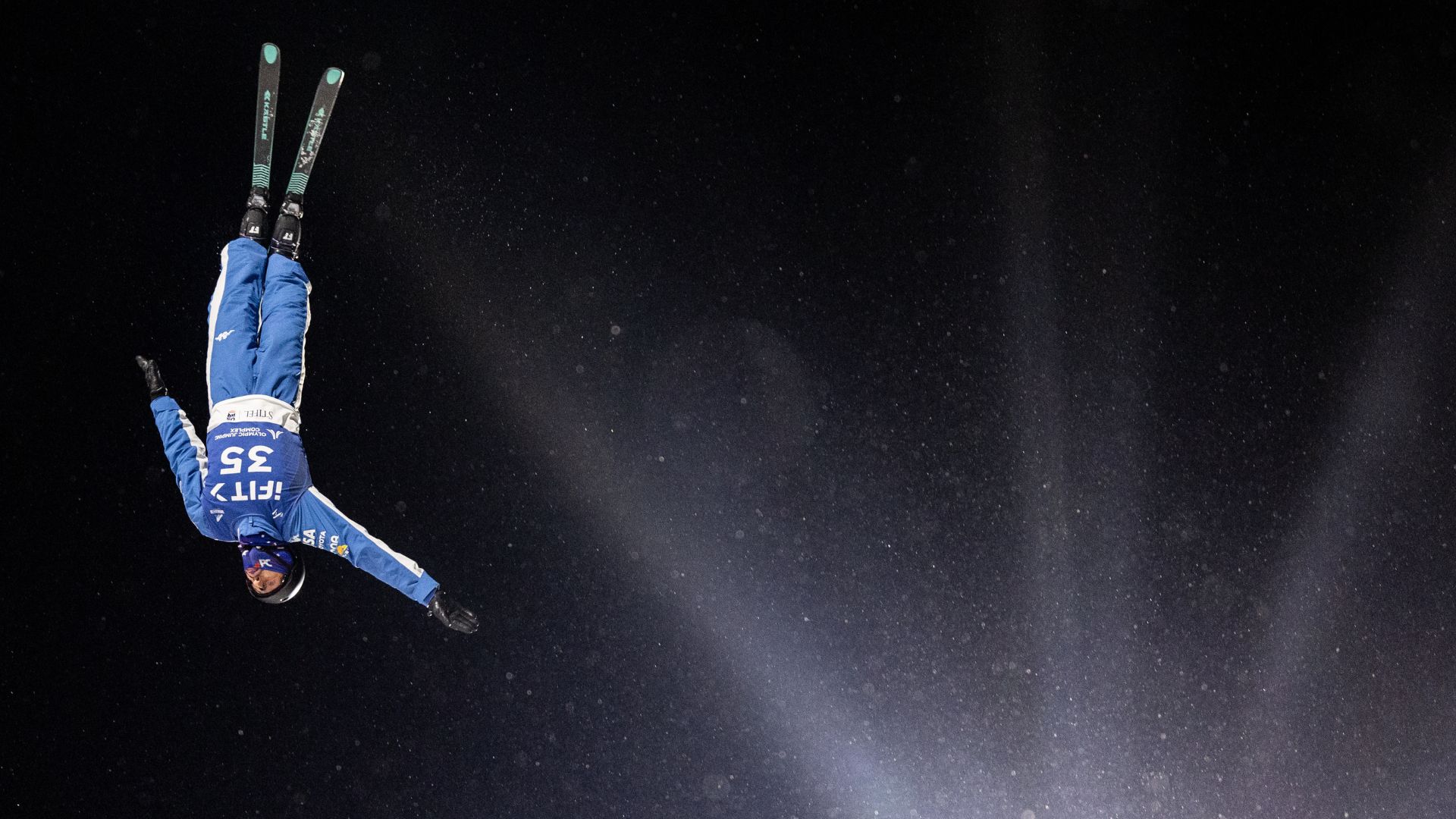
[Triple Threat] At the 2024/25 FIS Aerials World Cup opener in Lake Placid, Ashton Salwan landed his first triple in World Cup competition while still competing independently — a milestone that moved a major technical progression onto the world stage.
Debuting the World Cup Triple
Not every breakthrough is measured by a podium.
Some are measured by what an athlete is ready to put into competition.
On January 18, 2025, at the FIS Aerials World Cup season opener in Lake Placid, New York, Ashton Salwan stepped onto the triple jump for the first time in World Cup competition.
He landed a back-Full-Full-Full (bFFF) — a three-somersault, three-twist jump — and finished 18th overall.
The placement was part of the record.
So was the context.
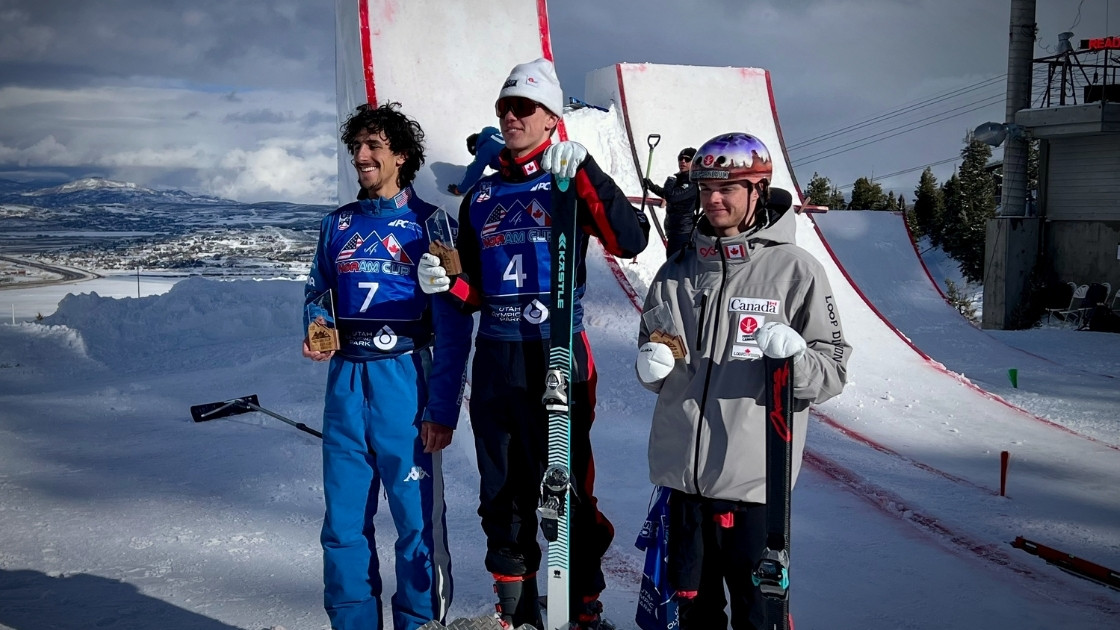
At the time, Ashton was still competing independently. Among the U.S. athletes competing from the triple hill that day, he was the only one doing so outside the U.S. Ski Team — months before his May 2025 nomination to the U.S. Freestyle Ski Team.
It was a clear marker of where he stood in his development: bringing World Cup-level technical difficulty into competition while continuing to build his path independently.
A Different Kind of Breakthrough
Lake Placid was less about the number beside Ashton’s name than about the technical step underneath it.
Months of independent training had been building toward a transition like this — taking a new level of difficulty out of training and putting it on snow under World Cup pressure.
That transition mattered.
Competing alongside Olympians and established World Cup athletes, Ashton put the bFFF into competition and came away with something tangible: the triple was now part of his World Cup competition record.
From there, the work became refinement.
More precision. More consistency. More repeatability.
The goal was never simply to perform the jump once. It was to continue developing it into a skill capable of holding up against the demands and margins of international competition.
“Throwing a Full-Full-Full at my first World Cup of the 2024/25 season wasn’t just about going big — it was about proving to myself that I was ready. The placement matters, but the belief I left with matters more.”
— Ashton Salwan
What Comes Next
The 18th-place finish remains part of the story, exactly as it happened. But so does what surrounded it: a first World Cup triple, an independent program, and the willingness to put a major technical progression into competition against one of the strongest fields in the sport.
Lake Placid was one piece of that larger body of work — not a finish line, but another step in a progression built through independent training, international competition, and continued technical growth.
That is what made the day matter.
The triple was no longer something Ashton was working toward.
It was something he had competed on the World Cup stage.
SEE IT IN MOTION: Watch the companion film HERE