

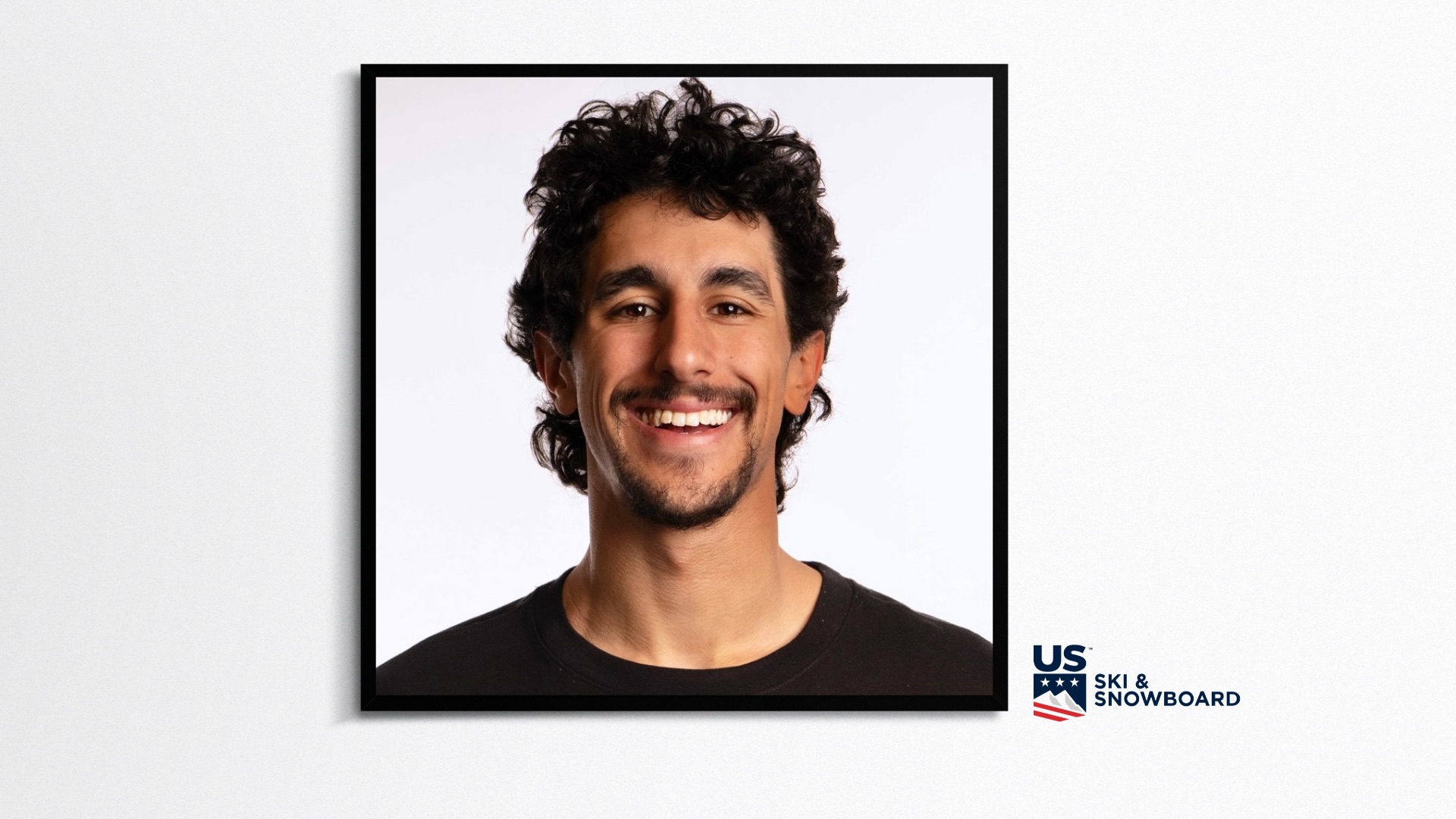
[A More Certain Starting Point] Officially named to the 2026–27 Stifel U.S. Freestyle Ski Team, Ashton Salwan enters his second season with three World Cup finals behind him, a deeper technical foundation and new work to carry onto snow.
The Announcement, Between Sessions
When the official announcement arrived on October 10, Ashton Salwan was in Brisbane, still working through the final weeks of a preseason that had taken him from Utah to Australia, through China and back again.
His name appeared on the 2026–27 Stifel U.S. Freestyle Ski Team’s Aerials B Team roster. Following his nomination earlier in the year, the announcement confirmed his second consecutive season on the U.S. Ski Team.
It was a milestone inside an unfinished training block. There were still takeoffs to refine, repetitions to complete and a transition to snow ahead.
But this time, Ashton approached the next season with a clearer understanding of what it would demand.
A Calmer Starting Point
The first year brought a new team structure, a full World Cup season and the work of finding his footing within both. Travel, preparation and competition arrived in quick succession. Each stop offered another lesson in how little room there can be between a strong jump and an early finish.
Year Two begins with experience he can draw on.
“Year Two feels a lot calmer than Year One. Coming off three World Cup top-12 results, I feel more established within the team, and that has helped my confidence when I’m jumping.”
•Ashton Salwan
During the 2025–26 season, Ashton reached individual World Cup finals at Secret Garden and twice in Lac-Beauport, finishing 10th, 10th and 11th. In China, he also helped USA-2 earn bronze in mixed team aerials.
He finished the World Cup season with 118 points and 16th place in the overall aerials standings.
Those results give his confidence a foundation. He knows what it takes to reach a final because he has done it. He also knows that one successful weekend does not settle the next.
The task now is to make that level of execution more repeatable — and to develop the jumps that could carry him further.
Four Twists, One Foundation
The overseas preseason gave Ashton an extended stretch of work across different training environments. The earlier Brisbane and Qinhuangdao blocks had centered on takeoff quality, body position and the ability to approach each jump without carrying the previous one into it.
Back in Brisbane for the U.S. team blocks, that work continued with a specific technical focus.
“The main focus of this camp has been dialing in the four-twist triples
— dFFF, FdFF and FFdF —
and making the takeoffs consistent from jump to jump.”
•Ashton Salwan
Each jump places four twists across three somersaults, with the double twist occurring in a different flip. Changing its placement changes the timing of the jump, the transitions between positions and the demands on aerial awareness.
The common requirement is a reliable takeoff.
Before the additional difficulty can become useful in competition, Ashton needs to reproduce the entry that gives him time and control in the air. That makes the repeated technical work central to the progression: the approach, the movement through the takeoff and the position from which everything else unfolds.
The jump codes describe the intended skill. The training is about making that skill dependable.
Keeping the Session Moving
Progress also showed up in how Ashton responded when a jump went wrong.
“I feel like I’ve figured out what I need to do to hit consistent takeoffs, and how to rebound from a bad jump and keep the session going well.”
•Ashton Salwan
That is a practical change with consequences beyond a single training day. A difficult attempt can consume the repetitions that follow if the athlete keeps trying to correct everything at once. Returning to a clear technical cue gives the next jump its own purpose.
The reset lesson from the earlier international blocks continued here. A breakthrough and a mistake both belong to the jump already completed. Neither can perform the next one.
For Ashton, the growing confidence comes partly from understanding that process: recognizing what happened, identifying what needs attention and returning to the work.
A Season Earned in Stages
Official team naming establishes Ashton’s place on the roster. World Cup starts require a separate selection process.
The season ahead will unfold through competition-period criteria, available quotas and results. That makes the early domestic competitions consequential, with opportunities to earn access to the opening World Cups and build from there.
The scheduled circuit begins in Lac-Beauport before moving to Lake Placid and Deer Valley. Later stops take the tour to China and Kazakhstan, followed by the World Cup Final in Shahdag, Azerbaijan.
For Ashton, the immediate objective is to earn starts and make them count. A strong current-season result can matter both competitively and within the selection process for later events. His previous finals provide experience; the new season requires new performances.
Ashton’s goal is to compete on the World Cup tour throughout the season. Across each selection period, his focus remains on earning starts, sustaining momentum and building consistency at that level.
The calendar provides the outline. Ashton’s results will help determine his route through it.
Montafon on the Horizon
Beyond the World Cup circuit, the 2027 FIS Freestyle World Championships in Montafon, Austria, give the season another objective.
A place on that team must be earned through the separate World Championships nomination process. For Ashton, it is an ambition to build toward as the winter develops.
The connection to Brisbane is practical. Four-twist triples could expand his competitive options once ready for snow competition. More consistent takeoffs support the execution needed to use that difficulty. A stronger reset gives him a way to respond when a competition does not begin as planned.
There is substantial work between developing a jump on water and delivering it on a World Championship stage. The next phase begins with taking those skills back to snow.
From Water to Winter
The planned late-November snow block brings another adjustment: speed, surface, landing and the rhythm of jumping in winter conditions.
Ashton arrives at that transition with a more specific understanding of his own preparation. He knows the technical details he has been working to repeat. He can identify progress in the way he manages a session. And he has a season of World Cup experience against which to measure what comes next.
Calmer does not mean the stakes have become smaller. It means he can approach them with more experience.
The October announcement confirmed his place on the team. The months in Brisbane helped prepare him for the work ahead.
Year Two begins with both — and with the next takeoff still to make.


